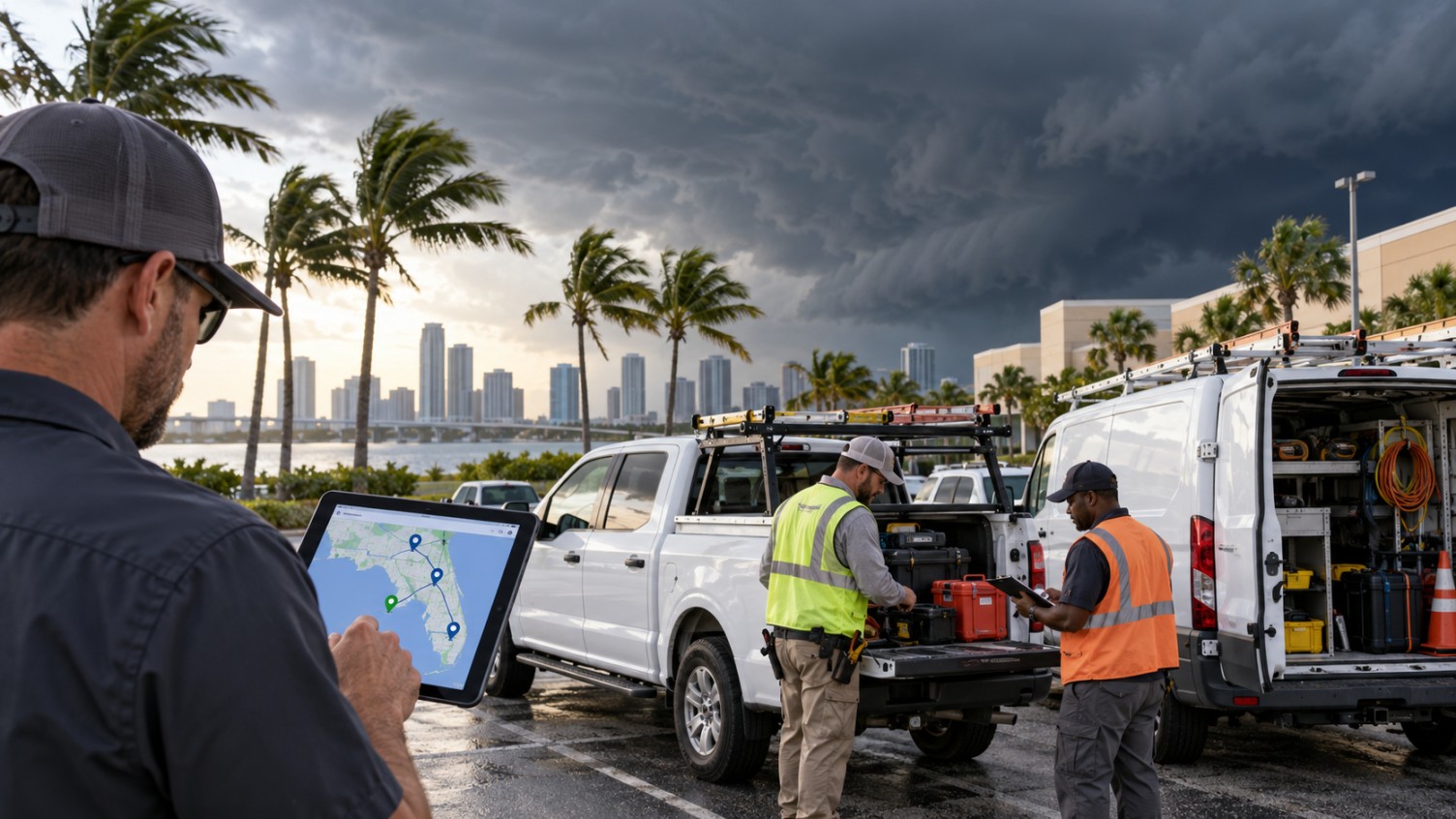
Every Florida business that sends crews out in trucks and vans plans its year around the same six months. The Atlantic hurricane season runs from June 1 through November 30, and for HVAC contractors, electricians, plumbers, roofers, pool services and landscapers, it shapes everything from staffing to fuel budgets. A quiet forecast does not change that. NOAA’s updated outlook for 2026 calls a below-normal season the most likely outcome, yet the same outlook is a general guide to overall activity, and the historical peak of the season stretches from mid-September through October. One storm on the wrong track is enough to shut down a service area for days and then flood the phone lines with repair calls.
For field service companies, a hurricane creates two problems at once. Before the storm, the business has to finish urgent jobs, protect vehicles and get crews home safely. After it passes, demand jumps at the same moment that roads, power and communications are least reliable. Both phases depend on knowing where every vehicle is and what it can reach.
Before the storm: finishing work and protecting the fleet
The days before landfall are some of the busiest of the year. Customers want generators connected, shutters installed, pools lowered and loose items secured, often on short notice. Dispatchers juggle these last-minute requests while watching forecast updates and deciding when to pull crews off the road.
That decision is easier when the office can see the whole fleet at once. A map that shows each truck’s position makes it clear which crews are close to home, which are still working across the county and which may need extra time to return before conditions deteriorate. Instead of calling each technician in turn, a dispatcher can plan the final round of jobs around where vehicles actually are and set a firm time for everyone to head back.
Protecting the vehicles themselves is the other priority. Trucks and vans are expensive to replace, and a business that loses half its fleet to storm surge or flooding will struggle to serve customers after the storm. Many companies move vehicles out of low-lying lots and coastal yards before landfall, park them in garages or on higher ground, fill fuel tanks in advance and keep a written list of where each vehicle ended up. Location records give that list a reliable backup, so the owner knows exactly where to find each truck once it is safe to go out again.
Preparation is also a good time to review basic information. Insurance documents, vehicle identification numbers and photos of each truck should be stored somewhere accessible from a phone, because the office itself may be closed or without power for several days.
After the storm: dispatching in a changed landscape
Once the storm passes, the challenge reverses. Calls arrive faster than crews can answer them, and the roads crews need are often blocked by debris, downed lines or standing water. Some neighborhoods may be reachable within hours while others stay cut off for days, and conditions can change between morning and afternoon.
Flooded roads are the most serious hazard for field crews. It takes just 12 inches of rushing water to carry away most cars, and work trucks loaded with tools are not immune. Businesses should make it a firm rule that no driver enters floodwater, whatever the pressure to reach a customer, and that crews report blocked routes so dispatch can steer others away.
Visibility over the fleet helps the office manage this changing picture. With GPS vehicle tracking, dispatchers can see where each crew is working, which areas trucks have been able to reach and how long jobs are taking in different neighborhoods. When a crew reports that a road is impassable, the office can redirect nearby vehicles and avoid sending a second truck into the same dead end.
Tracking information also supports the safety of people working long days in difficult conditions. After a major storm, crews may work extended hours in heat and humidity, often in areas with limited cell service. Knowing a truck’s last reported position makes it easier to check on a crew that has not called in, and trip records show when drivers have been on the road for long stretches and may need a break before the next job. The aim is to support crews and plan the workload sensibly, so drivers should know from the start what the system records and why it is being used.
Recovery work brings its own administrative load. Customers, insurers and property managers often ask when a crew arrived and how long it stayed. Trip records give the business a clear history of visits during a chaotic period, which helps with billing and answers questions that would otherwise rely on memory.
Building a hurricane plan around fleet data
The best time to prepare a fleet for hurricane season is before the first storm forms. Owners can use the quieter months to set up the routines that will matter when a storm approaches. A practical hurricane plan for a field service fleet usually covers:
- a list of safe parking locations away from storm surge zones, with an assigned spot for each vehicle
- a cut-off time for pulling crews off the road once a watch or warning is issued
- check-in procedures for crews working after the storm, including how often drivers report in
- a rule that no vehicle enters flooded roads, with a clear process for reporting blocked routes
- maintenance checks before the season starts, so tires, brakes and batteries are ready for long days
Fleet data makes each of these steps easier to carry out. Mileage records show which trucks are due for service before the peak months. Location history from previous storms, where available, shows how long it actually took crews to return to the yard and which routes caused delays. Trip patterns after a storm help an owner decide whether to bring in extra crews or shift work between service areas.
Florida’s hurricane risk varies widely by region, from the Keys to the Panhandle, and local emergency management offices publish evacuation zones and guidance that change over time. Businesses should follow official county instructions and NOAA forecasts for their area, and treat fleet tracking as one part of a broader plan that also covers staff, customers and facilities.
A business that knows where its vehicles are, how its crews are doing and which roads are open can respond to a storm with fewer surprises. The same routines also make ordinary dispatching during the rainy summer months more predictable.