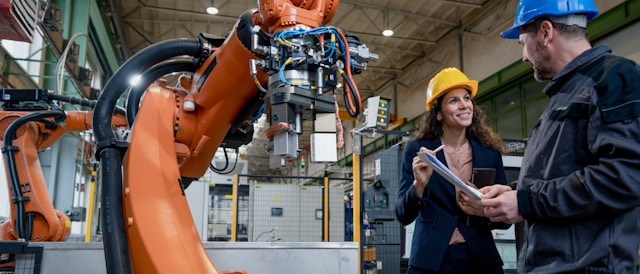
Industrial automation has come a long way since its early days, transforming manufacturing as we know it. Central to this transformation are robotic arms, which have taken on a vast array of tasks once performed by human hands, from assembly and welding to packaging and inspection. These versatile machines are at the core of modern factories, playing a crucial role in enhancing productivity, improving quality, and lowering costs.
Key Technologies Driving Robotic Arm Innovation
AI and machine learning are fundamental to the capabilities of modern robotic arms. Through AI, robotic arms can “learn” and improve over time, making real-time decisions based on the data they collect. This self-learning capability means they can adapt to new tasks and unpredictable situations, which is invaluable in industries where customization or quick shifts in production are essential.
Sensors and Vision Systems
Sensors are the “eyes” and “ears” of robotic arms, enabling them to interact with their environment. Vision systems, such as cameras and LiDAR sensors, allow robotic arms to detect objects, measure distances, and even identify defects in products. These systems greatly enhance the precision and accuracy of robotic arms, which is critical in fields like electronics manufacturing, where tiny components require meticulous handling.
Collaborative Robotics (Cobots)
Collaborative robots, or cobots, are designed to work alongside human operators. Equipped with advanced safety features, cobots detect human presence and respond accordingly, slowing down or stopping when necessary. This collaboration between robots and humans creates safer and more efficient work environments, especially in industries where delicate manual input is still required alongside automated processes.
Applications of Robot Arms in Various Industries
The automotive industry has been a leader in adopting robotic arms for tasks like welding, assembly, painting, and quality inspection. Robotic arms improve the speed and accuracy of these processes, helping car manufacturers meet high production demands. They’re also used in tasks that involve high temperatures or hazardous materials, protecting workers from potentially dangerous conditions.
Electronics and Consumer Goods
In the electronics sector, robotic arms handle delicate, precise tasks such as assembling printed circuit boards (PCBs) and placing micro-components. Given the tiny scale and intricacy of electronics manufacturing, robotic arms play an essential role in achieving the accuracy required to produce high-quality devices. They’re also used for quality control, as vision systems can detect microscopic defects.
Pharmaceutical and Medical Device Manufacturing
Robotic arms are crucial in pharmaceutical production, where precision and cleanliness are paramount. These robots are used in tasks such as filling syringes, packaging medicines, and even conducting inspections. Their reliability helps ensure that products meet strict safety standards, making robotic arms an invaluable part of the pharmaceutical manufacturing process.
Logistics and Warehousing
In logistics, robotic arms are utilized for sorting, packing, and palletizing items in warehouses and distribution centers. This automation is particularly valuable in e-commerce, where the demand for rapid, accurate order fulfillment is critical. Robotic arms can operate at speeds and with an endurance that far surpasses human workers, ensuring faster turnaround times and reducing the risk of errors.
Benefits of Robotic Arms in Industrial Automation
Robotic arms work tirelessly without the need for breaks, resulting in increased efficiency and higher production rates. Their ability to operate 24/7 without fatigue makes them ideal for industries that require consistent output, reducing the time needed to complete manufacturing cycles.
Improved Quality and Precision
Automation minimizes human error, and robotic arms are no exception. With precision down to the millimeter, robotic arms enhance product quality by performing tasks exactly as programmed. This precision is particularly valuable in fields like electronics and pharmaceuticals, where even slight deviations can lead to product failure.
Cost Reduction and ROI
Although the initial investment in robotic arms can be high, the cost savings over time are substantial. Automation reduces labor costs and waste, providing a significant return on investment. Additionally, with the ability to be reprogrammed and reused for various tasks, robotic arms offer a long-term, adaptable solution for companies seeking to streamline operations.
Enhanced Workplace Safety
Robotic arms are often used to perform hazardous tasks, such as handling toxic materials or working in extreme temperatures. This reduces the risk of injury for human workers, creating safer work environments. Collaborative robots further enhance safety by working alongside humans, allowing workers to focus on less dangerous tasks.
Flexibility and Scalability
Modern robotic arms are highly flexible and can be easily reprogrammed for new tasks, making them ideal for industries with changing production needs. As a result, factories can scale up or down according to demand without needing to reconfigure entire production lines, allowing businesses to remain agile in response to market fluctuations.
Conclusion
Robotic arms are transforming industrial automation, offering enhanced efficiency, quality, and flexibility. These versatile machines are pushing the boundaries of what’s possible in industries ranging from automotive and electronics to pharmaceuticals and logistics.
As the technology continues to evolve, robotic arms will likely become even more integral to manufacturing, helping companies like UR company drive forward innovation in this fast-paced field. With advances in AI, collaborative robotics, and connectivity, the future of industrial automation looks brighter than ever, paving the way for smarter, safer, and more sustainable factories.