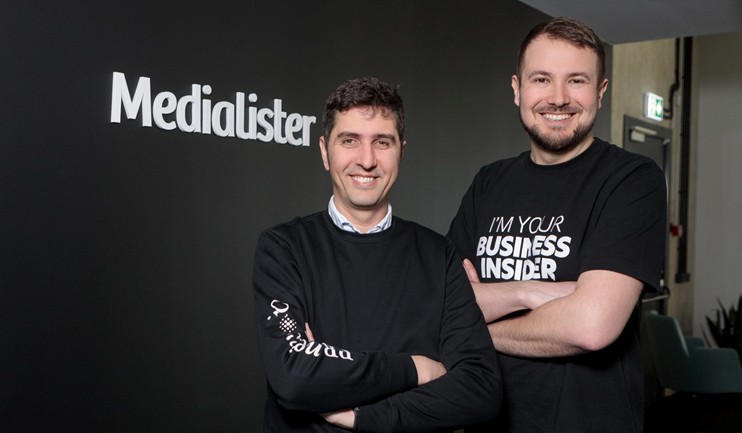
At B2B Marketing Expo Miami 2026, the Estonian-roots company PRNEWS plans to spotlight Medialister, a new platform built to move editorial advertising out of email threads and spreadsheets and into a marketplace-like interface where brands, agencies, and publishers transact in a more structured way.
From email chains to a structured marketplace
For years, sponsored articles, advertorials, and branded stories have largely been negotiated one by one: outreach, manual back-and-forth with editors, custom pricing, and little consistency from deal to deal. Medialister is PRNEWS’s attempt to productize that workflow. The platform aggregates editorial opportunities from multiple publishers — from trade outlets to niche sites — and lets buyers browse, compare, and book placements in a self-service environment.
The pitch is straightforward: instead of hunting for contacts, negotiating terms, and tracking campaigns in separate documents, marketers pick a publication, lock in a placement, upload or request content, and track status in one place. On the publisher side, Medialister positions itself as an additional revenue rail for editorial teams that want to monetize clearly labeled sponsored stories without building their own sales and workflow stack.
“Replacing email with a marketplace” is how founder Alexander Storozhuk has described the core idea behind Medialister, framing it as infrastructure rather than another tool for blasting pitches.
A spin-out from a 20‑year media-tech grind
Medialister is not a classic from-scratch startup. It comes out of PRNEWS, a company Storozhuk first began building as a student project in Eastern Europe nearly two decades ago. Over the years, that early news distribution system evolved into PRNEWS.IO, a content marketing marketplace that has worked with tens of thousands of clients across more than 100 countries, connecting brands with online publications at fixed prices.
Based in Estonia under the country’s e‑Residency digital identity program, PRNEWS now employs around 70 people and runs profitably, according to the company. That long operational history puts Medialister in a different category from many early-stage adtech experiments: it is a new product built on top of an existing network of media relationships, data, and repeat buyers.
In 2024, PRNEWS began positioning Medialister as the next step in that evolution, targeting editorial advertising specifically and aiming to become the world’s largest catalog of trade magazines and niche outlets that accept branded content. The company has already conducted beta programs with agencies and brands and is now preparing to raise a seed round of approximately $5 million to scale the product, with a goal of reaching 100,000 transactions within a year of its full launch.
AI Is Rewriting Search—and The Brief For Marketers
For brands, the ground is moving under their feet. Google’s AI overviews now crowd the top of results pages, pushing the first organic listing down to the eighth or ninth visible position, while news snippets and sponsored results fill the remaining space. At the same time, a new generation of users—exemplified for Storozhuk by his 10‑year‑old daughter—skip blue links entirely and go straight to conversational queries in LLM interfaces, trusting the synthesized answer more than any single site.
This shift turns classic local SEO into table stakes. Where it was once enough to stack a few backlinks and optimize keywords, AI‑mediated discovery forces brands to win on credibility encoded inside a knowledge graph. Medialister’s thesis is blunt: if LLMs do not see your brand consistently in trustworthy editorial contexts, they will not “know” to mention you when a user asks for recommendations. That transforms branded content from an awareness tactic into a data‑layer strategy—feeding AI systems with repeated, structured proof that a company is relevant, authoritative, and safe to recommend.
Why this matters for publishers and marketers
On the buy side, the macro story is familiar: customer acquisition costs are rising, traditional paid channels are crowded, and brands still want the credibility of appearing inside editorial environments — but without the unpredictability that has historically defined PR. Agencies, in particular, have been asking for tools that let them manage multiple client accounts, standardize workflows, and report on content campaigns with the same rigor they apply to performance media.
On the supply side, large platforms and social networks capture most digital ad dollars, while smaller trade and niche publications often struggle to monetize their specialized audiences. Medialister’s model bets that there is untapped value in making it easier for those outlets to package and sell sponsored content in a standardized way — and for marketers to discover them without relying on personal networks or one-off outreach.
If it works, the result is a more “programmatic” layer for editorial advertising: fixed-price, guaranteed placements sold through a catalog rather than negotiated on an ad-by-ad basis. That doesn’t solve questions about disclosure, ethics, or content quality, but it does push the mechanics of buying and selling these placements toward something more predictable and scalable.
Building during geopolitical and market shocks
Behind the product story is a founder narrative that TechCrunch readers will recognize: a long-haul operator navigating multiple waves of disruption. Storozhuk started in Ukraine in the mid‑2000s, grew PRNEWS internationally, and then had to manage expansion, rebranding, and automation efforts while dealing with the impact of war on his team and operations.
Those constraints forced the company to double down on automation and remote-first processes, laying the groundwork for Medialister’s marketplace approach. Instead of competing head-on in generic adtech, PRNEWS carved out a niche: guaranteed editorial placements for brands that want both reach and perceived authority.
By the time Medialister emerged as a separate product, PRNEWS had already served tens of thousands of businesses and learned where the bottlenecks were: inconsistent pricing, manual coordination, and a lack of data about which outlets actually move the needle for different categories. Medialister packages those learnings into a more focused interface aimed at PR pros, content marketers, and agencies.
The open questions
The idea of turning editorial advertising into a marketplace is not entirely new, and Medialister will have to navigate a few obvious fault lines. Publishers are protective of their brands and may resist anything that feels like commoditizing their editorial space. Marketers, meanwhile, will expect not just streamlined buying but also credible performance data — something historically difficult to attribute for top‑of‑funnel branded content.
Then there is the AI layer. As search and discovery increasingly run through AI answer boxes rather than traditional SERPs, brands are rethinking where and how they need to appear to be visible to both algorithms and people. PRNEWS has already begun curating outlets more likely to surface in AI-generated responses, and Medialister provides a vehicle to operationalize that strategy at scale.
For now, Medialister is a focused bet: that editorial placements can be standardized enough to behave like a product rather than just a relationship. B2B Marketing Expo Miami 2026 will be one of the first tests of how that story plays with the marketers and agencies who have been living with the old, messy system for years.